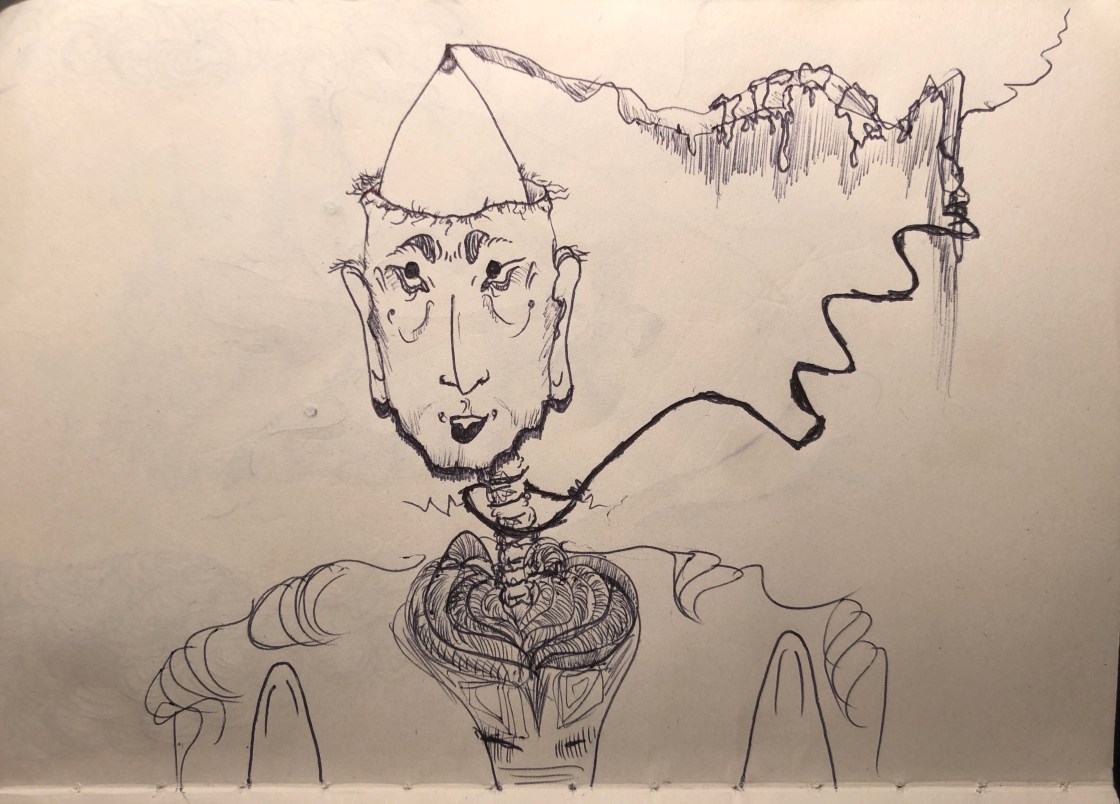
Synopsis: sketches inspired by the Japanese Ukiyo-E wood-print style.

I was in the 7th grade when I first studied the impressionists. I remember my trembling fascination as I sat in front of the fireplace of a restored barn, hidden away in the middle of an ancient mountain range in France. On the screen just above the flickering fire, a movie (The Impressionists, 2006) weaved a tale of hope, passion, and camaraderie. It was the story of the impressionists. I’ve wondered, since then, the sources of their imagination, I mean Degas, Monet, Bazille… I wanted to know what made them tick.
I started watching anime in 8th grade, sick of the constant expectations and scrutiny students in Hong Kong are often subject to. I longed for an escape. Just like that, hours of my second semester trickled away as I finished series after series. Then, even anime was not enough to fulfil me. I started searching up “Japanese art” on the internet, and I occupied myself with studying them. I discovered artists like Hokusai and Utagawa, who have since then become my muse. When I found out that I shared muses and inspiration (Japanese Ukiyo – E print) with some of the impressionists, my passion only grew.
The first sketch is a condensation of my cascading thoughts. I’ve always imaged the “floating world” to be surrounding by the kind of lingering fog one finds in swamps, the kind that is fragile, and ephemeral. This first sketch is a representation of the fog above the swamp, except the fog is the ink and the swamp the paper. I did not intend for it to induce reflection. However, if you itch to make meaning out of it, let it embody the fleeting life of a human being.
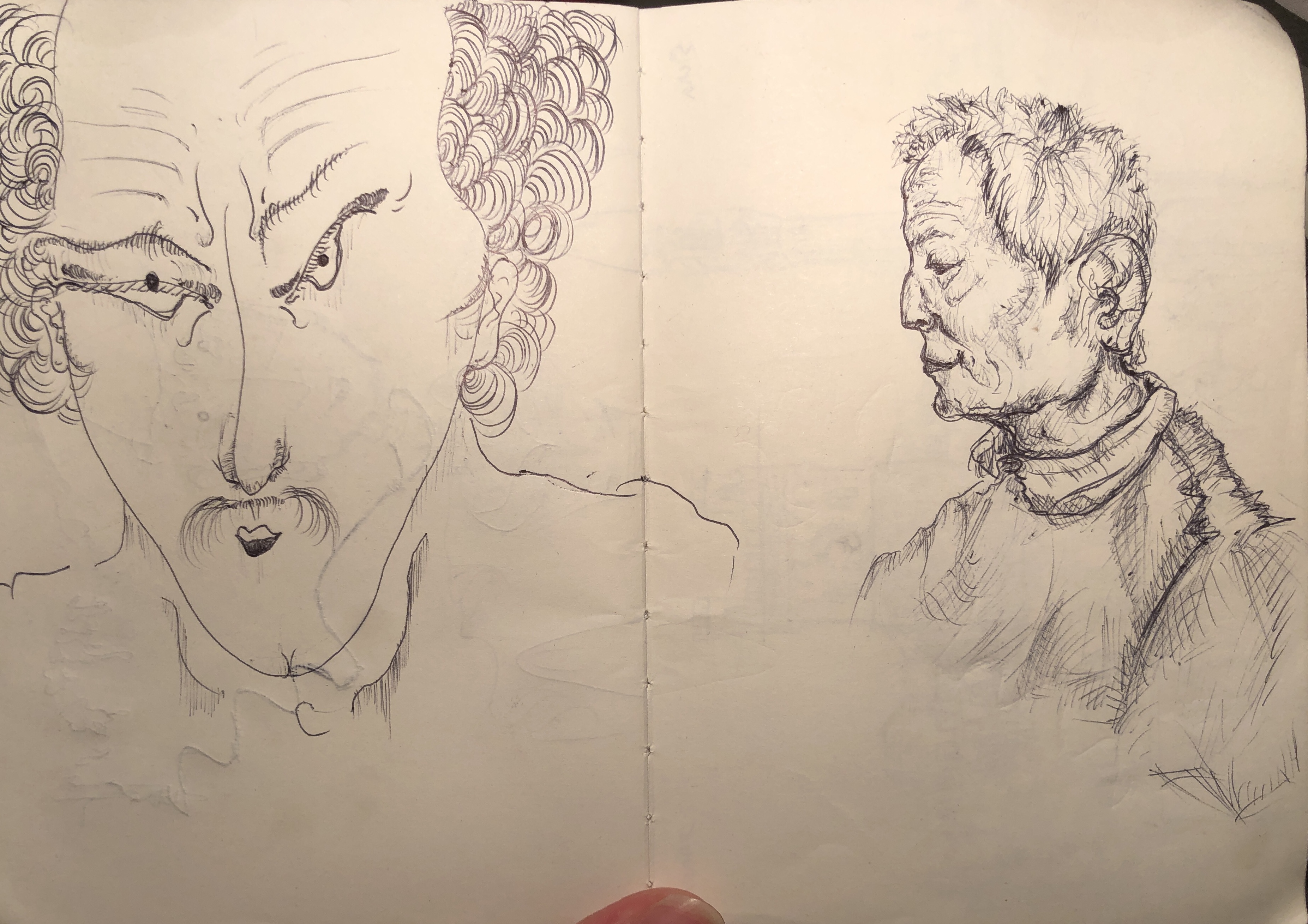
The second sketch consists of two portraits of the same man, in different styles. I wanted to juxtapose the Japanese Ukiyo-E style sketch with a realistic one, and compared the feelings each triggers. Turns out, I like the one on the left better, because it is not a print of reality.
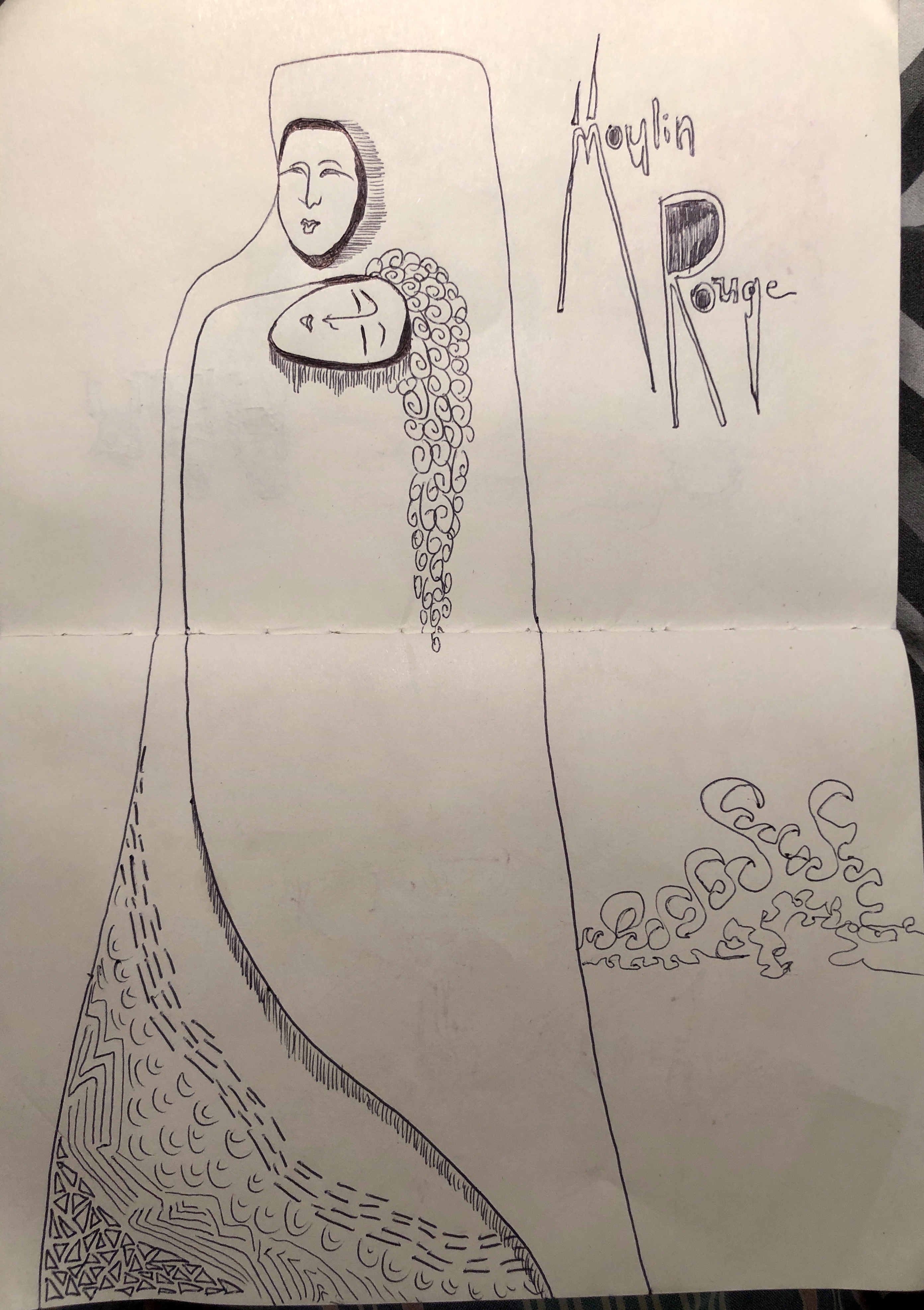
The final sketch was inspired by not only Japanese art, but Gustav Klimt’s “The Kiss”, and posters of Moulin Rouge by Henri de Toulouse – Lautrec. I think all of the aforementioned works succeed in projecting a tangible spirit, despite having only two dimensions, and flat with intentions. I wanted to experiment with the idea of how space can be represented in a picture that squashes it with intention.
I hope you enjoyed my little endeavour!! Stay tuned for more to come!
About the Artist:
Abby Lu
See About page.
 The Big Duck